Volunteers
Welcome to the ACTIVE VI Volunteer Community
Whether you are an experienced volunteer guide or taking your very first step into inclusive fitness, your willingness to help makes a profound impact. Volunteers are the heartbeat of our movement—you are the bridge that makes safe, accessible, and empowering physical activity possible for persons with visual impairment.
Your Voice Makes a Difference
As a volunteer, when guiding a person with visual impairment during exercise, how you speak matters just as much as what you teach. Many traditional fitness instructions rely heavily on visual cues like “over here,” “like this,” or “watch me”—phrases that can be confusing or unhelpful.
Your goal isn’t perfection; it is clarity, respect, and inclusion. By making your instructions accessible, you make movement empowering.
See it in action: Want to hear firsthand experiences and watch sight-guiding demonstrations?
Jump down to our Watch & Listen section.
Core Guiding Principles
Key Principles to Remember
- Ask First: Never assume help is needed—always ask the participant before providing assistance.
- Avoid Vague Language: Eliminate visual-only cues such as “stand like this” or “reach over there.”
- Be Specific: Use specific body parts and explicit directions.
- Allow Processing Time: Give the participant ample time to process instructions before starting a movement.
- Encourage Dialogue: Actively encourage questions and open feedback throughout the session.
Helpful Guidance Tools
- The Clock System: Use the clock system for clear spatial direction (for example, 12 o’clock means directly forward, 3 o’clock means directly to the right).
- Body Landmarks: Refer explicitly to anatomical landmarks such as feet, hips, shoulders, and hands to guide physical alignment.
- Pressure-Free Options: Always offer exercise modifications and adjustment options without any pressure.
Accessible Guidance Checklists
1. Before the Exercise
- Introduce: State your name and your exact role clearly upon arrival.
- Explain: Outline what exercise, sport, or pose will be practised during the session.
- Check Experience: Ask if the participant is already familiar with the specific movement.
- Confirm Cues: Ask how they prefer to receive guidance (for example, verbal cues only, or a combination of verbal cues and physical touch).
- Clear the Environment: Ensure the immediate physical space is entirely free of obstacles and hazards.
- Set References: Establish a mutual directional reference point (such as the clock system).
2. While Giving Instructions
- Descriptive Language: Use clear, specific, and highly descriptive terminology.
- Anatomical Cues: Name specific body parts instead of using generic visual indicators.
- Step-by-Step Delivery: Break down complex movements and give directions one step at a time.
- Consistent Points: Use reliable reference points throughout the room (for example, clock directions, the floor, or a mat).
- Eliminate Fillers: Ban words like “here,” “there,” “this,” or “like that” from your cues.
- Offer Adjustments: Provide easy-to-follow options, progressions, and modifications.
- Check Pace: Speak at a calm, steady pace, and remind participants they can pause or ask questions at any point.
3. Safety & Support
- Stable Footing: Continually emphasise balance and maintaining a stable physical base.
- Transition Warnings: Give clear verbal warnings well before any changes in movement or transitions happen.
- Respect Limits: Never force a participant’s range of motion.
- Mandatory Consent: Never touch or physically move someone’s body without explicit, proactive consent.
- Protect Autonomy: Always respect the participant’s personal space and individual autonomy.
4. After the Exercise
- Exit Cues: Clearly explain exactly how to safely transition out of the movement or pose.
- Review: Ask the participant how the exercise felt physically.
- Invite Feedback: Openly request feedback regarding the clarity of your verbal instructions.
- Appreciate: Sincerely thank the participant for their dedication and effort.
Key Reminder: Accessible instruction is not about doing more—it’s about doing better. Clear language builds confidence, independence, and trust.
Your Accessible Guidance Toolkit
Want to take these guidelines to your next session? Download a quick-reference, printable version of this checklist below. For more tools—including health screening forms and guides on eye conditions—be sure to explore our complete Resources page.
Watch & Listen
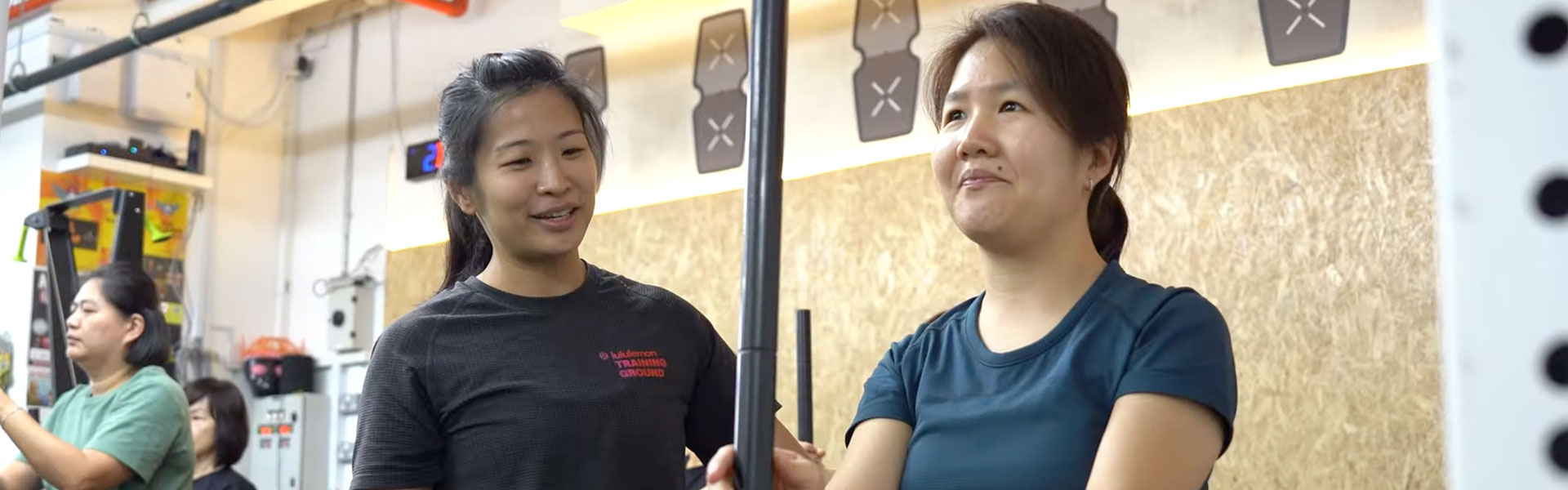
Video Description: A montage of volunteers and visually impaired participants engaging in various fitness activities, including weightlifting and rowing, within a CrossFit gym setting. The participants and volunteers are smiling and interacting positively, demonstrating teamwork and mutual support.
Podcast Episode 4: Clear Cues and Good Guides
Pei Pei and Lydia share their firsthand experiences in a trampoline class, highlighting what makes a fitness environment truly inclusive. They emphasise the critical need for clear verbal instructions from instructors, effective class noise management, and volunteers who understand how to guide and correct postures thoughtfully.
Watch Video: Sight Guiding VI Techniques – The Do’s and Don’ts
What does good sight guiding look like? It all comes down to communication, respect, and partnership. In this practical guide, ACTIVE VI participant Teh Lin and volunteer Simon demonstrate the essential do’s and don’ts of sight guiding individuals with visual impairments.